Don't Touch the Setup: The Hidden Cost of Swapping Gear Mid-Tournament
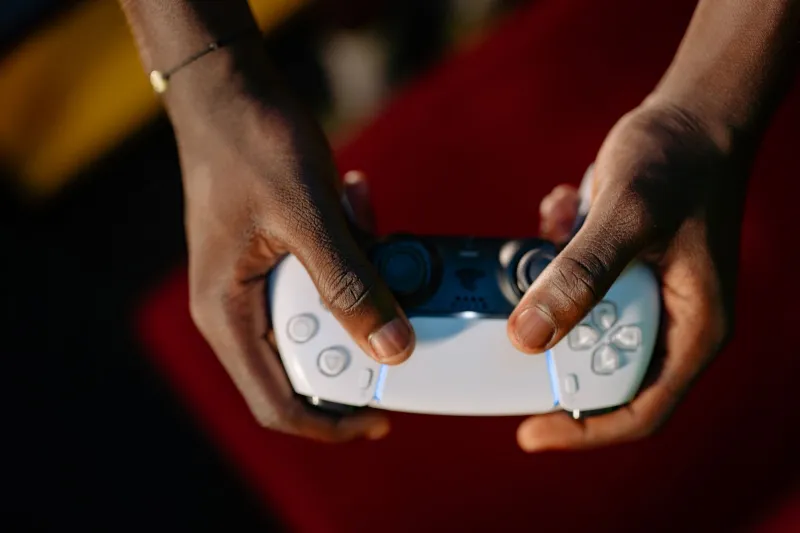
There's a moment every competitive gamer dreads. You're deep in a bracket, adrenaline running hot, and something goes wrong with your gear. Maybe a trigger starts sticking. Maybe your mouse double-clicks on its own. Maybe an organizer hands you a loaner controller because your primary got flagged at check-in. Whatever the reason, you're now playing the most important match of your season on unfamiliar equipment — and your hands have absolutely no idea what's happening.
It sounds minor. It isn't.
The relationship between a competitive player and their peripherals goes way beyond preference. Over hundreds — sometimes thousands — of hours of practice, your nervous system essentially rewires itself around a specific piece of hardware. The weight of the controller, the resistance of the triggers, the exact click depth of a mouse button. These aren't comfort factors. They're performance infrastructure. And when that infrastructure disappears mid-tournament, the consequences can be brutal and immediate.
Muscle Memory Doesn't Negotiate
Sports science has spent decades studying how athletes develop motor programs — deeply ingrained movement patterns that execute below the level of conscious thought. A pitcher's release, a basketball player's free throw routine, a golfer's swing. These patterns are built through repetition and become automatic precisely because conscious thinking is too slow under pressure.
Competitive gaming works the same way. When a high-level player executes a combo, makes a precise flick shot, or inputs a frame-perfect movement, they're not consciously deciding to do it. Their muscle memory is doing the work. The brain is busy reading the game state, making macro decisions, managing positioning. The mechanical execution is on autopilot.
Swap the peripheral, and that autopilot gets scrambled.
A controller with slightly stiffer analog sticks will throw off aim calibration that a player has spent months perfecting. A mouse with a different lift-off distance will cause micro-errors in tracking that compound under pressure. Even switching from one model of keyboard to a nearly identical one — same layout, different actuation force — can introduce hesitation at exactly the wrong moment.
The player isn't worse. Their hands just don't recognize the new tool yet.
The Pressure Multiplier
Here's where it gets really ugly: the psychological load of adapting to new gear doesn't just affect mechanical performance. It actively competes with the mental bandwidth a player needs to compete at a high level.
Under normal circumstances, the mechanical side of play is handled by automatic processes, freeing up cognitive resources for strategy and decision-making. But when something feels off with the equipment, those automatic processes start throwing errors. The player's brain gets pulled down into the mechanical layer — suddenly they're thinking about their grip, their input timing, whether the stick is responding correctly — at a moment when they need to be thinking about rotations, opponent tendencies, and win conditions.
It's like asking a professional driver to recalibrate the steering sensitivity mid-race. Sure, they can probably handle it. But some of the mental horsepower that was going toward reading the track is now going toward managing the car. And in competition, that margin matters.
Several pro players who've competed at LAN events have described the experience in similar terms: a creeping doubt that starts in the hands and works its way up. You land a play and it doesn't feel right even if it worked. You miss something you'd normally hit in your sleep. And then the self-questioning starts, which is the real killer.
Why Players Refuse to Swap — Even When They Should
This is why you'll occasionally see competitive players do things that look irrational from the outside. Taping up a cracked controller shell rather than switching to a fresh one. Competing on a mouse with a dying sensor because it's their mouse. Showing up to events with three backup units of the exact same peripheral model because they refuse to risk even a minor variation.
It's not superstition. It's performance risk management.
The calculus is straightforward: a slightly degraded version of familiar hardware often outperforms unfamiliar hardware in pristine condition. The muscle memory advantage of a known tool frequently outweighs the technical advantage of a better one. Especially in short-format tournament matches where there's no time to adapt.
This logic gets pushed to extremes at the highest levels. Some pros have been known to track down discontinued peripheral models on eBay and stockpile them. Others have sent equipment to repair techs rather than replace it with a newer version of the same product. When your livelihood depends on performing on a specific day, the investment makes complete sense.
The Tournament Organizer Problem
Not every gear crisis is self-inflicted. Standardized equipment rules at certain tournaments — especially console events — mean players sometimes have no choice but to adapt. Controllers get checked for unauthorized modifications. Hardware that passes inspection at one event gets flagged at another. Regional events often have different equipment standards than national ones.
This creates a real tension between competitive integrity (which standardized equipment rules are designed to protect) and player performance (which depends heavily on familiarity). There's no clean answer here, and the debate inside the competitive community is ongoing. But the players bearing the cost of those mid-event swaps are often the ones who've invested the most in their craft.
Organizers who dismiss equipment concerns as player pampering are missing what the research and the lived experience both say: this stuff has real performance consequences, and it hits hardest in the highest-pressure moments.
Building a Setup That Travels
For competitive players trying to protect themselves from the peripheral curse, the practical answer is preparation. Not just owning backups, but training on them. Rotating through identical units during practice so your hands stay calibrated to the hardware rather than to one specific worn-in instance of it. Some players deliberately introduce minor equipment variations in low-stakes sessions to build adaptability — essentially stress-inoculating their muscle memory against the unexpected.
The mental side requires preparation too. Developing a pre-match routine that grounds you in your setup — a few minutes of warm-up that aren't about winning, just about letting your hands remember what they know — can help stabilize performance when something feels off. It won't fully compensate for a major peripheral change, but it narrows the gap.
The bottom line is this: in competitive gaming, your gear isn't just a tool. It's part of your game. Treat any disruption to it as seriously as you'd treat a change in your practice schedule or a shift in your team's strategy. Because in a tournament bracket, when the pressure is real and the margin is thin, your hands will tell the truth — and they'll tell it based on what they've been trained to know.
Don't give them something they've never felt before and expect them to perform like they have.