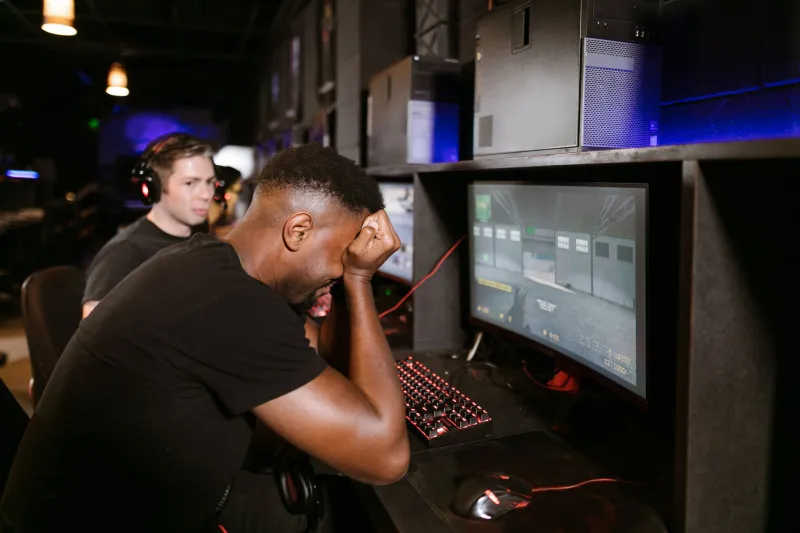
Muted and Broken: How Voice Channels Are Quietly Destroying Team Rosters
Every competitive team has a story about the roster that should have worked. The one with the right mix of mechanics, the solid scrim record, the hype behind it heading into a major tournament. And then, somewhere between the team house and the main stage, it all unraveled.
More often than coaches want to admit, the unraveling started in a voice channel.
Not during a match. Not even during scrims. It started in the casual Discord calls, the post-loss debriefs, the late-night venting sessions that nobody ever puts on a schedule but everybody knows define the actual culture of a team. That's where the real damage gets done — and where most organizations aren't paying nearly enough attention.
The Invisible Practice Session
Competitive teams obsess over scrim blocks. They track VODs, analyze opponent tendencies, and schedule mental performance check-ins. But ask a coach how much intentional structure goes into how their team communicates in non-game settings, and you'll usually get a long pause.
"We treated our Discord like it was just a hangout space," said one assistant coach who worked with a mid-tier North American squad last year. "And then we'd wonder why guys were showing up to scrims with beef that came from nowhere. It came from somewhere. It came from three conversations that went sideways at midnight and nobody addressed."
This is the Discord Divide — the growing gap between how seriously competitive organizations treat in-game communication versus how casually they handle everything happening around it. Teams will spend hours reviewing comms footage from a tournament match but won't have a single structured conversation about why two players haven't spoken directly in two weeks.
The result is rosters that look functional on paper and feel radioactive in practice.
Tone Policing and the Silence It Creates
One of the sneakiest killers of team chemistry isn't yelling. It's the overcorrection that follows yelling.
A lot of teams, particularly younger ones, have gone so hard in the direction of "no toxic comms" that they've accidentally built environments where honest feedback is impossible. Someone calls out a bad rotation, gets told they're being negative, and learns to stop calling things out. The team gets quieter. The problems don't.
"There's a difference between toxic communication and uncomfortable communication," explained a mental performance coach who works with several amateur esports rosters. "Teams that can't tell the difference end up with players who are polite to each other's faces and furious on the inside. That's a worse culture than one with some friction, because at least friction is visible."
The best teams aren't the ones where everyone sounds calm all the time. They're the ones where people can say hard things without it becoming a personal attack — and where there's enough trust built up outside of game moments that criticism doesn't feel like a threat.
Building that kind of trust doesn't happen automatically. It requires actual leadership, and that's where a lot of rosters are coming up short.
Leadership Vacuums in the Server
Most competitive teams have an in-game leader. Far fewer have someone who's actively managing the social dynamics of the team's communication channels with any intentionality.
In traditional sports, locker room culture is considered a legitimate coaching concern. Coaches talk about it, GMs think about it, and organizations invest in people whose entire job is to maintain it. In esports, the equivalent space — the Discord server, the team group chat, the voice channels — is largely treated as self-managing.
It isn't.
When there's no one actively shaping the norms of how a team communicates, those norms get set by whoever talks the loudest or whoever's been on the roster the longest. That's not always the person with the best judgment. And once a communication culture calcifies, it's extremely hard to change without a major intervention.
"I've walked into teams where the entire vibe of the server was set by one player who had been there for two years and had basically decided that vulnerability was cringe," one head coach recalled. "Every new player adapted to that culture instead of the other way around. We lost two really talented guys because they couldn't break through that wall."
What the Top Teams Actually Do Differently
Here's what separates organizations that get this right from the ones that don't: the best teams treat their communication infrastructure the same way they treat their practice schedule. It's not an afterthought. It's a system.
That means a few concrete things. First, structured check-ins that aren't about the game — regular conversations where players talk about how they're feeling about the team dynamic, not just the win rate. Second, clear norms around how feedback gets delivered, with explicit agreement from the whole roster rather than just an unspoken assumption. Third, leadership accountability, meaning someone — a coach, a team captain, or a dedicated team manager — is actually responsible for monitoring the health of team communication and flagging issues before they become fractures.
It also means taking post-loss communication seriously. A lot of team blowups happen in the 30 minutes after a bad tournament loss, when emotions are high and nobody's thinking clearly. The teams that survive those moments aren't the ones with the most composed players — they're the ones that have pre-agreed protocols for how to handle them. Cool-down periods. Mandatory breaks before any debrief. A culture where "let's talk about this tomorrow" is respected rather than seen as avoidance.
The Fix Isn't Complicated, But It Is Intentional
None of this requires a massive budget or a full-time therapist on payroll, though having mental performance support certainly helps. What it requires is treating the social side of team life with the same seriousness as the competitive side.
For every hour a team spends reviewing a scrim, there should be some fraction of that time going into intentional communication maintenance. Not team bonding activities for the sake of content. Actual, structured conversations about how the team is functioning as a unit.
The rosters that make it to the big stage and hold together under pressure aren't just mechanically sound. They're communication-sound. They've done the work in the Discord server, in the voice channels, in the post-loss silences — and they've built something durable enough to survive the moments when everything's on the line.
The ones that implode? They usually had all the talent. They just never figured out how to talk to each other.
And by the time the problems showed up on the stage, they'd been living in the server for months.