Gear Gap: Is Expensive Hardware Actually Winning Games or Just Winning Excuses?
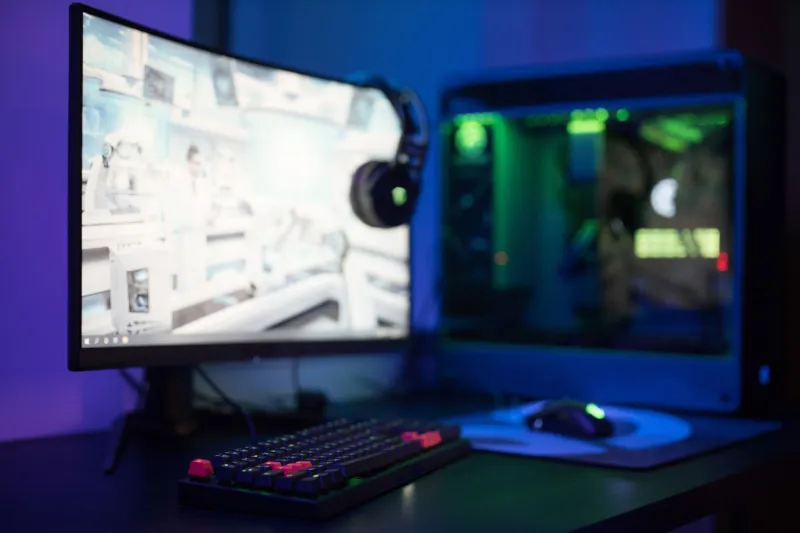
Walk into any serious gaming setup these days and you'll find the same altar: a $200 mouse with a polling rate measured in the thousands, a monitor refreshing at 360Hz, a mechanical keyboard with switches tuned like a Formula 1 engine. It looks impressive. It costs a fortune. And if you listen to the loudest voices in competitive gaming, it's basically mandatory.
But here's the thing nobody wants to say out loud — most of us aren't good enough for any of that hardware to matter.
The Arms Race Nobody Asked For
Competitive gaming peripherals weren't always a prestige market. Back when Counter-Strike was running on college LAN setups and Halo 2 was the center of the competitive universe, most players were using whatever mouse came bundled with the family desktop. The gap between a $15 optical mouse and a $150 gaming mouse wasn't a conversation anyone was seriously having.
Then esports blew up. Sponsorships flooded in. Suddenly every top streamer and pro player had a branded peripheral deal, and the implicit message was crystal clear: if you want to play like them, you need to buy what they use.
The peripherals industry has since ballooned into a market worth well over $4 billion annually in North America alone. Brands like Logitech, Razer, SteelSeries, and Corsair have built empires on the promise of competitive edge. And they're not wrong that their products are technically superior to budget alternatives — they just might be wrong about how much that superiority translates to wins.
What the Specs Actually Do
Let's be real about what high-end gear genuinely offers. A 360Hz monitor does reduce motion blur and input lag compared to a standard 60Hz display. That's measurable and real. A high-polling-rate mouse does register micro-movements more accurately. Low-latency mechanical switches do actuate faster than membrane keyboards.
At the absolute peak of professional play — talking Valorant Radiant, CS2 Global Elite, the top 0.1% — those marginal gains can theoretically matter. Pro players competing for six-figure prize pools are operating at a level where milliseconds and pixel-perfect tracking have genuine stakes.
But here's where the narrative breaks down: the vast majority of players sitting in Gold or Platinum aren't losing because their mouse has a 500Hz polling rate instead of 1000Hz. They're losing because they're peeking corners wrong, ignoring minimap rotations, and tilting after two bad rounds. No $180 mouse is fixing that.
Studies and community testing have consistently shown that beyond a reasonable baseline — a decent 144Hz monitor, a reliable optical mouse, a standard mechanical keyboard — additional hardware investment produces diminishing returns so small they're essentially noise for most skill levels.
The Real Cost: Who Gets Left Behind
Here's where the conversation shifts from "interesting debate" to something that actually matters for the future of competitive gaming.
There are kids in rural Ohio, South Side Chicago, and East LA with genuine talent — fast reflexes, sharp game sense, natural leadership instincts — who can't afford to drop $600 on a competitive setup. When the community consensus becomes "you need this gear to compete seriously," those players get filtered out before anyone ever sees what they're capable of.
Grassroots tournaments increasingly reflect this divide. Local LAN events that once attracted diverse skill-level participation are seeing smaller turnouts among younger, lower-income players. The barrier to entry isn't just time investment anymore — it's a hardware tax that not everyone can pay.
This matters for esports as a whole. The talent pool narrows. Organizations miss out on players who never got the shot to prove themselves. The scene becomes a reflection of who could afford to show up rather than who was actually best.
The Excuse Economy
There's a flip side to this that deserves equal scrutiny, though.
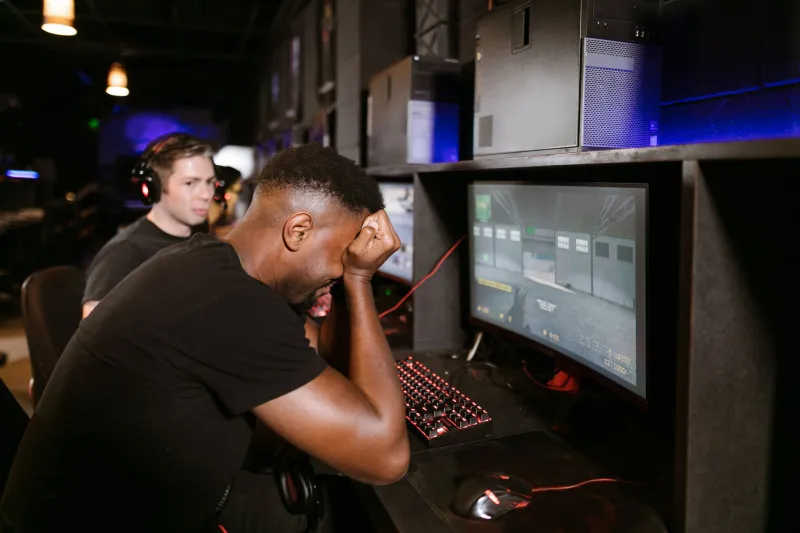
Gear blame has become one of the most reliable coping mechanisms in competitive gaming. Lost a gunfight? The mouse wasn't tracking right. Missed that jump? The keyboard has input delay. Got outplayed in a teamfight? The monitor's refresh rate held you back.
This mindset is genuinely toxic for player development. When you externalize losses onto your equipment, you stop analyzing the actual mistakes — the positioning error, the decision-making lapse, the mechanical habit that needs drilling. Upgrading your gear feels productive. It scratches the improvement itch without requiring the hard work of actually getting better.
The peripherals industry, whether intentionally or not, profits directly from this psychology. Every time a frustrated Gold player convinces themselves that a new mouse will finally push them to Platinum, a sale gets made. The gear doesn't deliver. The player stays stuck. And eventually, a newer, more expensive product drops with fresh marketing promises.
Finding the Actual Baseline
So where does that leave us? The answer isn't "gear doesn't matter" — that's overcorrecting. It's more nuanced than that.
For serious competitors who are genuinely performing at high levels and looking to squeeze every possible advantage, investing in quality peripherals makes sense. At that tier, the marginal gains are real, and the financial investment is proportional to the competitive stakes.
For everyone else — the vast majority of the player base — the priority order should be fundamentals first, hardware second. A player with crisp crosshair placement, solid game sense, and reliable communication is going to outperform a mechanically average player with a $300 mouse every single time.
The community also has a responsibility here. Content creators and pro players who promote gear need to be honest about the limits of hardware advantage rather than letting their sponsorship messaging imply that equipment is the primary separator between skill tiers. That narrative does real damage to newer players who are still developing their fundamentals.
What the Scene Needs to Acknowledge
Competitive gaming has always prided itself on being the great equalizer — the space where raw skill matters more than resources. That identity is worth protecting.
Organizations running grassroots and amateur tournaments should consider gear-equalized formats where all participants use standardized setups. It removes the hardware variable entirely and forces a pure skill comparison. Some LAN events already do this, and the competitive integrity it produces is genuinely refreshing.
Beyond that, the community needs to have an honest conversation about what "pay-to-win" actually looks like in peripheral form. It's not as blatant as buying in-game power, but the gatekeeping effect is real — just slower and dressed up in RGB lighting.
The best player in your bracket probably isn't beating you because of their mouse. They're beating you because they've put in more hours, studied the game more deeply, and developed habits you haven't built yet. That's the uncomfortable truth that no amount of hardware upgrades will change.
Buy decent gear. Then go practice.