Ghost Accounts, Ghost Skills: How Pro Players Are Practicing Themselves Into a Corner
Ghost Accounts, Ghost Skills: How Pro Players Are Practicing Yourself Into a Corner
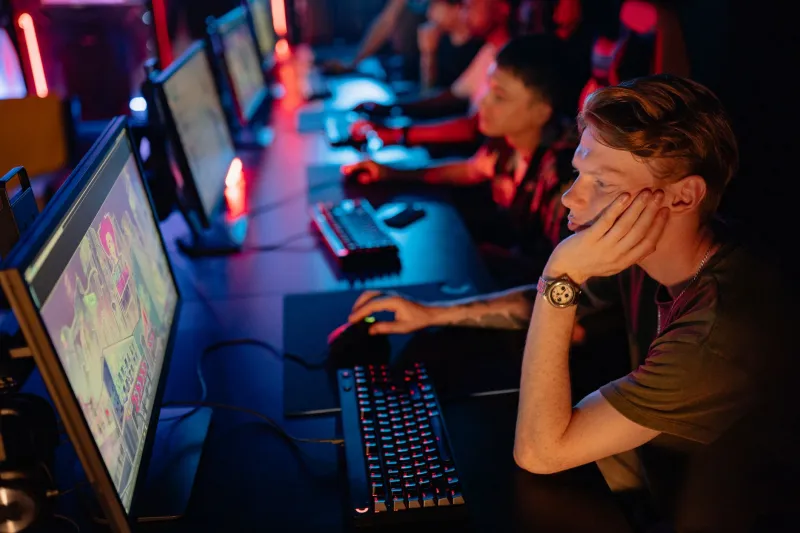
There's a ritual that almost every serious ranked player knows about. You hit a certain level of notoriety — maybe you're pulling consistent tournament placements, maybe your stream numbers are climbing — and suddenly your main account becomes a liability. People recognize your username. They're watching your stream while they queue against you. They're drafting specifically to counter your tendencies before the match even starts.
So you do what everyone does. You make an alt.
Maybe two. Maybe five. You scatter your practice across different accounts, different MMR brackets, different usernames. It feels like a smart workaround. And honestly, for avoiding stream snipers and targeted harassment? It is. But here's the part nobody's talking about loudly enough: all that fragmented grinding might be chipping away at the very competitive instincts you're trying to build.
The Comfort Trap Nobody Warns You About
When you queue on a fresh alt, you're not playing in your real competitive environment. You're playing in a softer one. The opponents are less disciplined. The rotations are sloppier. The decision-making at the margins — the stuff that separates a good player from a great one — is just different at lower MMR brackets, even if only temporarily.
Your brain is adaptive. That's the whole point of repetition-based practice. But adaptation works both ways. When you spend hundreds of games reading opponents who make predictable mistakes, your threat-assessment calibration starts to drift. You begin anticipating errors that won't exist when you're on stage against a team that's also been grinding at the highest level.
Coaches in traditional sports call this "practicing below the line." It's the equivalent of a point guard running drills against defenders who aren't trying. The movements become muscle memory, sure. But the reads — the mental shortcuts your brain builds for anticipating pressure — get trained on the wrong inputs.
Fragmented Identity, Fragmented Awareness
The alt account problem isn't just about MMR mismatch. It's also about context collapse.
When you're playing on your main, there's a psychological weight to every match. Your rank, your reputation, your history with certain opponents — all of that creates a kind of heightened awareness that mirrors tournament conditions. You're playing with something on the line. That stress, as uncomfortable as it is, is training your nervous system to perform under pressure.
Alt accounts strip that away. You're anonymous. The stakes feel low. And low-stakes environments, no matter how mechanically intense, don't replicate the cognitive load of a real competitive match. You're not building pressure tolerance. You're building a habit of playing relaxed in situations that are supposed to be stressful.
Then tournament day arrives, and suddenly everything feels heavier than your recent practice sessions prepared you for.
The Meta Blind Spot
Here's another layer that doesn't get enough attention: the competitive meta isn't evenly distributed across MMR brackets.
New strategies, updated builds, refined team compositions — these emerge first at the highest levels of ranked play and filter downward over time. When a pro player is grinding on an alt account stuck in a lower bracket, they're often playing against a version of the meta that's weeks or even months behind. They're not seeing the bleeding-edge adaptations that their actual tournament opponents are developing and refining in real time.
This creates a dangerous gap. A player might feel extremely confident coming into a tournament because their alt account grind has been going well. Their mechanics feel sharp. Their win rate looks great. But the strategies they've been drilling against are outdated, and the reads they've been building are calibrated to a slower, less sophisticated version of the game.
It's like studying last year's playbook while your opponents are already running this season's schemes.
Why Teams Haven't Fixed This Yet
The obvious question is: why aren't organizations stepping in? Why aren't coaches designing structured practice environments that give players the anonymity they need without the MMR fragmentation?
Some teams are starting to move in this direction — private scrimmage servers, coordinated practice blocks with other pro rosters, internal ranked ladders that keep competition at the right level. But these solutions require coordination, resources, and a culture that prioritizes long-term skill development over short-term comfort. A lot of organizations, especially mid-tier ones, just don't have that infrastructure built out.
And honestly, players themselves are resistant to giving up their alts. The alt account has become a coping mechanism as much as a practice tool. It's where you go when you want to grind without the pressure of your main. It's low-stakes by design. Convincing a player to give that up — or at least to be more intentional about when and how they use it — is a harder sell than it sounds.
What Smarter Practice Actually Looks Like
This isn't an argument for eliminating alt accounts entirely. The privacy concerns are real. Stream sniping is a genuine problem, and targeted harassment in ranked lobbies can make meaningful practice nearly impossible on a recognizable account.
But there's a difference between using an alt as an occasional shield and using it as your primary practice environment. The players who seem to maintain the sharpest competitive awareness are usually the ones who treat high-stakes ranked on their main as irreplaceable, even when it's uncomfortable. They might use alts for mechanical warm-ups or for experimenting with off-meta picks, but the real practice — the kind that builds genuine game sense — happens in environments that actually reflect tournament conditions.
Some pros have started being more vocal about this balance. The framing that seems to stick is treating your main account like a scrimmage and your alts like a shooting gym. You can get real work done in both places, but you can't replace one with the other and expect the same results.
The Bigger Picture
Competitive gaming is maturing fast. The gap between players who are just mechanically skilled and players who have deep, adaptable game sense is becoming the defining divide at the highest levels. Mechanics can be trained in almost any environment. Game sense — the ability to read opponents, anticipate shifts in the meta, and make high-quality decisions under pressure — requires the right environment to develop.
Alt accounts, used carelessly, are quietly working against that development. They're comfortable. They're convenient. And they're training a lot of talented players to be very, very good at a version of the game that doesn't exist when the real money is on the line.
Something to think about next time you log into account number four.