Lagging Behind: The Netcode Crisis Quietly Rigging Pro Esports Matches
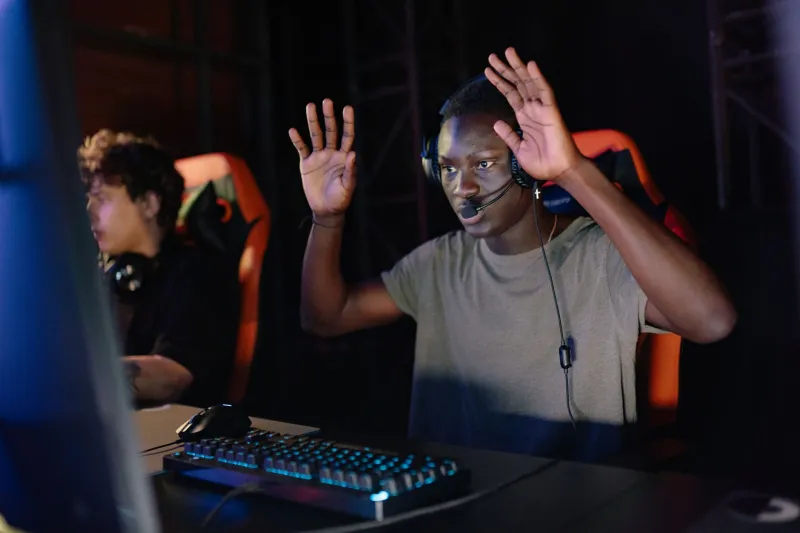
Imagine grinding ranked queues for four years. You make it to a LAN event. The prize pool has six zeros in it. And then, on the round that matters most, your character doesn't respond. Not because you hesitated. Not because your opponent outplayed you. Because a server somewhere hiccupped for 80 milliseconds.
That's not a hypothetical. That's a Tuesday in professional esports.
The conversation around competitive integrity has never been louder — match-fixing investigations, doping scandals, roster poaching drama. But there's a quieter, more pervasive problem corroding the foundation of tournament play: server infrastructure that simply isn't built to hold the weight of competitive gaming at the highest level. And the organizations writing the big checks? They're largely looking the other way.
What We Mean When We Say "Netcode"
Netcode is the invisible plumbing of online multiplayer. It's the set of systems that determine how your game client communicates with a server, how it handles the gap between what you did and when the server registers it, and how it reconciles differences between players on different connections.
There are two dominant models: rollback netcode and delay-based netcode. Without going full computer science on you — rollback is generally considered superior for fast-paced competitive play because it allows the game to predict inputs and correct mistakes after the fact, making the experience feel smoother even on imperfect connections. Delay-based just... waits. It holds your inputs until both sides are synced, which introduces a sluggishness that compounds under stress.
Many major esports titles — including some that run six-figure tournaments — are still running delay-based systems. In 2024. That's not a technical limitation. That's a choice.
The Matches That Should Have Gone Differently
Pro players have been quietly documenting these moments for years, but the clips rarely go viral because they're hard to explain to a casual viewer. A missed shot looks like a miss. A teleporting enemy looks like a weird angle. The invisible loss — the one caused by a server tick rate failing to register an input — just looks like a mistake.
Fighting game communities have been loudest about this. At multiple major events over the past few years, players have posted frame-by-frame breakdowns showing inputs that registered on their screen but never reached the opponent's client in time. The result? A combo that should have landed didn't. A match was lost. A career trajectory bent.
First-person shooter scenes aren't immune either. Valorant and CS2 have both seen high-profile moments where kill-trade timing and hit registration have sparked heated debates about whether the server or the player was responsible. The problem is that without access to server-side logs — which tournament organizers almost never release — there's no way to prove it definitively. Players get blamed. The infrastructure gets a pass.
"You Can Feel It, But You Can't Prove It"
That's the phrase that keeps coming up when you talk to competitive players about this stuff. They know when something is off. Years of muscle memory make the feel of a laggy server unmistakable. But esports doesn't have the equivalent of a ball going out of bounds. There's no clear visual proof to point to.
One mid-level FPS pro, who asked to remain anonymous because he's still under contract, described it this way: "There are matches where I know I played well. I know my crosshair was on. I know I clicked. And the kill didn't come. You go back to the VOD and it looks fine because you're watching from one perspective. But I've seen the server-side replay. It doesn't match."
The psychological toll is real. When you can't trust that your inputs are being faithfully represented, you start second-guessing your own reads. That uncertainty is a performance killer — and it disproportionately affects players with higher ping who are already fighting an uphill battle at LAN events hosted in regions far from their home.
Tournament Organizers and the Convenient Blind Spot
Here's where it gets frustrating. Major tournament organizers — the ones running events with prize pools north of $500,000 — have the leverage to demand better. If you're writing a check that size, you can absolutely require that game publishers provide dedicated, high-tick servers, real-time server monitoring, and post-match server logs available to teams upon request.
Very few do.
The reasons vary. Some organizers have cozy relationships with publishers and don't want to rock the boat. Others simply don't have the technical staff to evaluate server performance independently. And some, frankly, don't see it as their problem — they're in the business of running events, not auditing infrastructure.
The players bear the consequences either way.
There have been small signs of progress. A handful of fighting game tournaments now use rollback-enabled builds specifically for competition, separate from the retail version of the game. Some FPS organizers have started publishing server tick rates and match conditions in post-event reports. It's not enough, but it's movement.
What Actually Fixing This Looks Like
The solution isn't complicated, even if it's not cheap. Standardized server specs for tournament play. Mandatory tick rate minimums. Third-party server monitoring during matches. And critically — a dispute process that takes server-side data seriously when players raise concerns.
Right now, the closest thing esports has to an officiating standard is a referee watching for obvious rule violations. There's no equivalent of replay review for a contested kill. No challenge flag. No technical review board.
The NBA has Hawk-Eye. The NFL has instant replay. Esports has a Discord message to a TO who's already running three matches simultaneously.
For a space that markets itself on precision and skill, that's an embarrassing gap. The players competing at the highest level deserve infrastructure that matches their ability. Until tournament organizers and publishers treat server quality as a competitive integrity issue — not just a technical footnote — the best player won't always win. And everyone in the scene knows it, even if nobody at the top wants to say it out loud.
The lag isn't just in the servers. It's in the accountability.