Mind Games Are Meta Now: The Psychological Arms Race Happening Inside Pro Esports
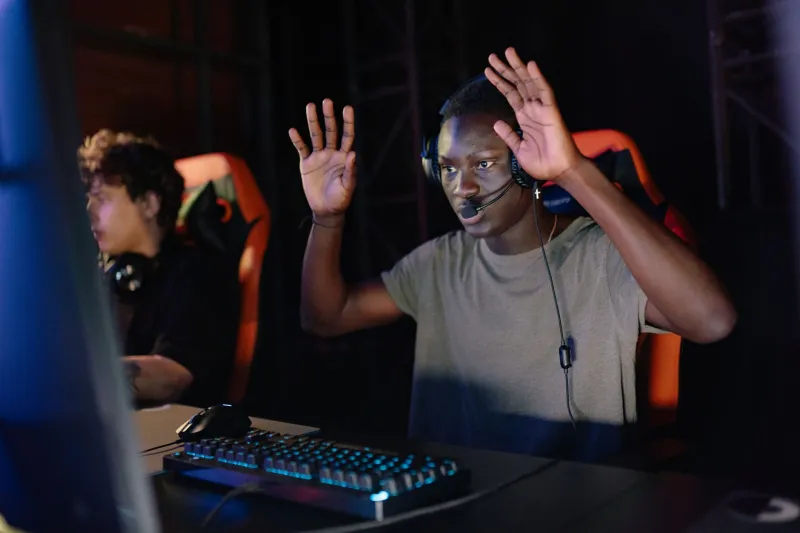
If you've been watching competitive esports long enough, you've probably noticed something that doesn't show up in any stats spreadsheet. Some teams just look beaten before the game even loads. Their opponent walks onto the stage, and there's already an imbalance — a subtle but unmistakable shift in body language, in confidence, in energy. The scoreboard hasn't moved yet, but mentally, the match is already in motion.
That's not an accident. Increasingly, it's a strategy.
Psychological tactics in competitive gaming have always existed at the fringes — the trash talk, the mind games, the carefully timed taunts. But what's changed in recent years is the sophistication. Elite esports organizations are now treating mental conditioning as a core competitive discipline, right alongside aim training and strat review. And the teams that haven't caught up are getting exposed.
Tilt Is a Vulnerability, and Everyone Knows It
Let's start with the obvious: tilt is real, it's universal, and at the highest levels of play, inducing it in your opponent is a legitimate competitive strategy.
Tilt — that frustrating mental state where anger, anxiety, or frustration starts degrading your decision-making — isn't just something that happens to your average ranked player. It happens to pros. It happens on the biggest stages. The difference is that elite teams have started treating tilt management as a two-sided coin: you train your own players to resist it, and you learn how to manufacture it in the other team.
This is where pre-match trash talk evolves from entertainment into something more calculated. When a team publicly calls out their upcoming opponent's weaknesses, questions their mental fortitude, or makes bold predictions, they're not just generating content for social media. They're applying pressure. They're trying to get inside the other team's preparation. If your opponent spends the week before a series defending themselves online instead of focusing on VODs, that's a win before a single round is played.
The Architecture of a Mind Game
Psychological pressure in competitive esports operates at multiple levels, and they're worth breaking down.
Pre-match. This is the public-facing layer — social media posts, press conference comments, interview soundbites. Teams and players who are skilled at this don't just trash talk randomly. They target specific insecurities. They highlight recent losses. They frame narratives that put the opponent on the defensive. It's calculated, not impulsive.
In-game. This is where it gets really interesting. In games like Valorant, CS2, or League of Legends, there are in-game communication tools — pings, voice chat in team environments, emotes — that can be weaponized. More subtly, the pace of play itself can be psychological. Teams that understand their opponent's tilt triggers will sometimes deliberately slow down or speed up the tempo of a match to disrupt rhythm. A team that thrives in chaos will intentionally force chaotic scenarios. A team that excels at grinding out slow victories will stall and suffocate until their opponent cracks.
Post-loss. This might be the most underrated layer. How a team handles a defeat publicly — particularly in a series — sends a signal to their opponent. Teams that visibly deflate after dropping a map are handing over mental real estate. Teams that project calm after a loss, that respond with composed press conference answers and measured social posts, are actively defending their psychological position heading into the next match.
Sports Psychologists Are No Longer a Luxury
Five years ago, the idea of an esports org hiring a full-time sports psychologist would have seemed like overkill. Today, it's becoming a competitive baseline.
Sports psychologists working in esports describe their role as building what they call "mental infrastructure" — the habits, routines, and frameworks that allow players to perform under pressure consistently. This includes things like pre-match visualization routines, breathing techniques for high-leverage moments, and structured post-game debrief processes that prevent individual errors from snowballing into team-wide confidence crises.
But they're also increasingly involved in the offensive side of mental strategy. Understanding opponent psychology — identifying which players on the other team are prone to emotional reactions, which ones underperform after early deficits, which ones need to feel in control to play well — is becoming part of preparation. It sounds almost clinical, but this is exactly how traditional sports have operated for decades. Football coaches study opposing quarterbacks' decision-making tendencies under pressure. Baseball managers analyze how batters respond to adversity. Esports is just catching up.
Confidence as a Competitive Weapon
Here's something that doesn't get talked about enough: projected confidence, even when partially manufactured, has a measurable effect on competitive outcomes.
Teams that enter a match believing they're going to win — not hoping, but genuinely expecting — play differently. They take calculated risks. They don't second-guess shot calls. They push advantages harder. And their opponents feel it. There's a reason certain orgs have developed reputations for being mentally formidable opponents. It's not just their mechanics or their strategy books. It's the energy they bring to every series, and the psychological weight that reputation carries into every matchup.
Building that reputation takes time. It also takes deliberate cultivation. Teams that win close matches and project ease afterward are doing something intentional. They're stacking psychological capital that pays dividends in future series.
Is This Crossing a Line?
Fair question. There's a version of psychological warfare in esports that tips into toxicity — personal attacks, targeted harassment, behavior that goes beyond competitive edge and into genuine harm. That line exists, and it gets crossed sometimes.
But the more sophisticated version of mental tactics? The strategic confidence projection, the tilt management, the calculated pre-match pressure? That's just competition. Every major sport has it. The NBA has it. The NFL has it. Combat sports are basically built on it. Esports reaching a point where mental strategy is treated as a genuine discipline isn't a sign of something going wrong — it's a sign of the space maturing.
The teams that figure this out first have a real edge. The ones that ignore it are bringing a mechanics knife to a full-on strategic gunfight.
At PlayBison, we'd argue the mental game is already the third pillar of elite esports — it just hasn't been given the same public recognition as aim and strategy. That's changing fast. Watch how the best teams carry themselves next time you're tuned into a major. You'll start seeing the architecture underneath the action.
The mind games aren't coming. They're already the meta.